
Quick answer: #iGiveCatholic 2026 takes place on GivingTuesday, Tuesday, December 1, 2026. Advanced Giving opens Monday, November 16, and extended giving closes Tuesday, December 8. The parishes that do best don’t invite people to “support the parish.” They invite people to fund specific ministries and projects, organize those ministries as fundraising teams, and, where there is a parish school, run the day together with the school rather than against it.
Why a parish giving day needs a different case than a school
At ISPD, we recommend that a school’s giving day be part of its overall Annual Fund campaign or fund a specific classroom need. However, annual fund donations are usually considered unrestricted operational gifts. A parish doesn’t work that way. Its ordinary life is sustained week by week through the offertory and through stewardship of time, talent, and treasure.
That changes the case for a giving day. If the invitation on December 1 is “support St. Mary’s,” a faithful parishioner who already gives every Sunday hears a second collection for the same thing, and may hear that what they give isn’t enough. That is not the message you want in the first week of Advent.
The stronger approach is to treat the giving day as a roadway for a gift beyond regular stewardship, tied to something parishioners can picture: a ministry they love, a need they have seen, a project they will be able to point to next year. “Help our St. Vincent de Paul Society fill 300 Christmas food boxes” invites. “Support our parish” doesn’t.
Last year, #iGiveCatholic raised nearly $27 million for 1,845 parishes, schools, and ministries. Parishes are a large share of that community, and the ones that tell a specific story stand out on the leaderboard and in the pews.
Choose three to five ministries or projects parishioners can picture
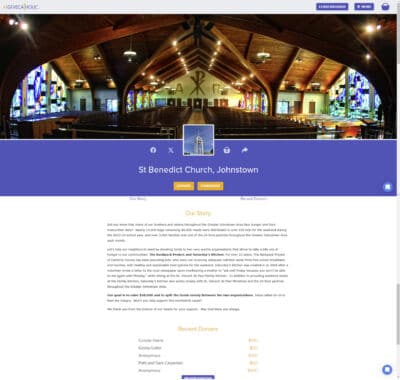 A good giving-day project is concrete, measurable, visible within a few months, owned by a ministry leader, and clearly connected to the mission of the parish. Write each one in a single sentence: “$X will do Y for Z people by [date].”
Ideas that tend to resonate:
- St. Vincent de Paul or food pantry: emergency rent and utility help, Christmas food boxes
- Youth ministry: retreat and conference scholarships so no teen stays home because of cost
- OCIA and faith formation: Bibles, catechisms, and materials for new Catholics and families
- Music and liturgy: new hymnals, a repaired organ, choir music
- Bereavement and funeral luncheon ministry: supplies to serve grieving families
Don’t overlook a targeted capital project. Some of the strongest giving-day cases are physical needs that have to be done but don’t call for a full capital campaign: a wheelchair ramp so every parishioner can come through the front door, upgraded church doors, a new or restored statue, a sound system so everyone can hear the homily. They are concrete, easy to picture, and finished within months, so donors see the result the next time they come to Mass. Sometimes the case writes itself. If the boiler doesn’t turn on in November, a warm church for Christmas quickly becomes your most urgent case point. Pair one project like this with your ministries, so the giving day reflects both the life of the parish and the place where it gathers. If the need is bigger than a single day can carry, such as a new roof or a major renovation, that’s a sign it belongs in a capital campaign built on a financial feasibility study.
Keep the list short. Five clear invitations beat fifteen competing ones. Then add one “greatest needs of the parish” option for donors who would rather let the pastor decide.
Turn your ministries into fundraising teams
This is where parishes have an advantage schools don’t: dozens of ministries, each with its own circle of committed people. In most #iGiveCatholic communities, supporters can set up fundraiser pages linked to your parish page, so every gift still counts toward the parish total. Check your dashboard for the options your diocese has turned on.
Invite each featured ministry’s leader to serve as a team captain:
- Set up the ministry’s fundraiser page with its own goal, a short story, and a real photo.
- Invite every member of the ministry to give first and then personally invite their family, friends, and neighbors.
- Share progress in the ministry’s own group texts and emails, not just the parish’s channels.
This is ripples in the pond at work. The first ripple is the 20 to 30 people who are always involved. The choir member’s sister, the SVdP volunteer’s neighbor, and the youth minister’s former students are the second and third ripples, and they give because someone they know invited them. A little friendly spirit between ministries is fine; keep it celebratory, with milestones the whole parish cheers, rather than a ranking that leaves a smaller ministry embarrassed.
Settle the money questions before launch. With your pastor and finance council, decide how fundraiser and designated gifts will be recorded and passed to each ministry, and what happens if a project goes over or falls short. Put that language on each page: “Gifts beyond this goal will support [related ministry / the greatest needs of the parish].” A designated gift must be used as the donor intended, and trust is the whole foundation of next year’s giving day. Watch the balance, too: the most visible ministries attract the most gifts, so make sure the quieter, behind-the-scenes needs still have a place in your budget.
Parishes with schools: one community, two invitations
Where a parish has a school, the giving day should never become us versus them. Both should have a strong presence, and both should trust that donors will give to the ministry they most want to support. A grandparent may give to the school; a retired parishioner may give to the food pantry; a young family may give to both. Every one of those gifts strengthens the parish. The school is a ministry of the parish.
What that looks like in practice:
- Register both and plan together. Many #iGiveCatholic communities rank parishes and schools on separate leaderboards, so they aren’t competing for the same spot.
- Share one message calendar. Coordinate send times so families don’t get three emails in the same hour from the same campus.
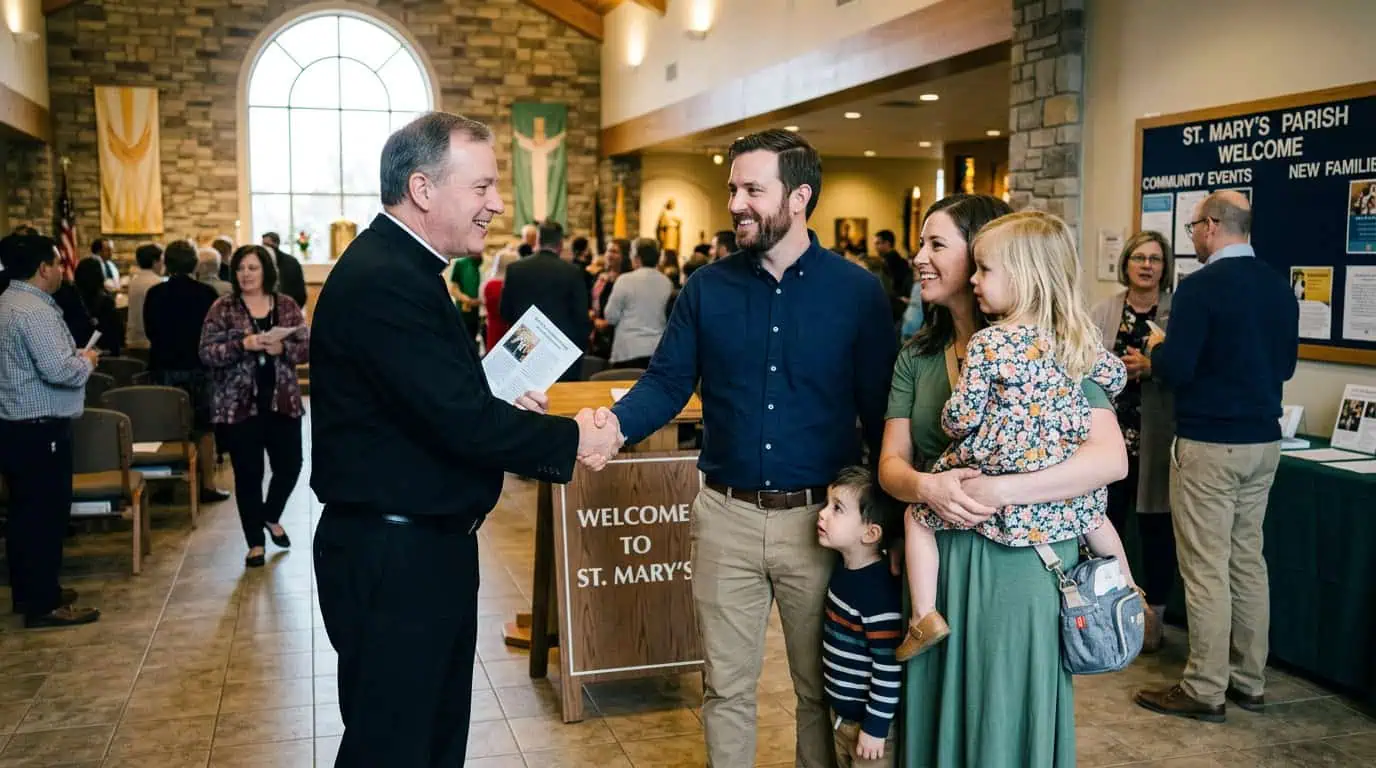
- Put the pastor and principal side by side. A joint letter or a short video together tells parishioners this is one family.
- Link to each other. The parish page points to the school page and vice versa, and Sunday announcements name both.
- Celebrate together. Report both totals in the bulletin and from the pulpit, and thank donors to each.
Your four-week parish plan
Week of November 2: Set the case
Confirm your registration (most dioceses closed November 1; some run later). With the pastor and finance council, choose your three to five projects, write the one-sentence case for each, settle your designation language, and finish your parish page: story, goal, photos, and a short video if you have one.
Week of November 9: Build the teams and secure a match
Invite ministry leaders to serve as team captains and help them set up their fundraiser pages. Invite a Knights of Columbus council, a parish family, or a local business to offer a matching gift, and invite pastoral council, finance council, and ministry leaders to give first. Prepare bulletin inserts, pulpit announcements, and #iGiveCatholic envelopes for the pews.
Week of November 16: Open Advanced Giving
Ministry members and parish leaders give first, so nobody lands on an empty page on December 1. Announce it at every Mass on the weekend of November 21–22, the Solemnity of Christ the King. Schedule your emails, texts, and social posts now. Thanksgiving week will take the next one.
Weekend of November 28–29: The First Sunday of Advent
This is your most important weekend. Make a pulpit announcement at every Mass, put envelopes in the pews, and set up a table after Mass where volunteers help parishioners give on a tablet or phone. Advent gives you the frame: preparing room for Christ includes making room for others.
Tuesday, December 1: Giving Day
- Morning: an email and text from the pastor, a social post, and an announcement at daily Mass.
- Midday: a progress update by ministry and the matching-gift announcement.
- Evening: a “final hours” message, with the match deadline as the urgency.
- Night: a thank-you to everyone who gave and everyone who shared.
Keep the parish office open with someone ready to accept checks and help callers give.
December 2–8: Thank, close, and involve
Thank every donor within 48 hours, and have each ministry leader personally thank the people who gave to their ministry. Collect offline gifts by December 8. Report each ministry’s total in the bulletin and from the pulpit. Then report the impact (the food boxes delivered, the teens on retreat) in January and February.
Most important: invite your new donors into the ministry, not just the next gift. The person who funded the food pantry may be your next volunteer. That is the 7 I’s in practice (Identify, Inform, Invite, Involve, Implement, Invest, Improve), and it is how belonging leads to believing.
Giving-day best practices from parishes and churches
Across Catholic and other Christian communities, a few practices show up again and again:
- Use Sunday, because GivingTuesday is a Tuesday. Your parishioners gather on the weekend, so the Sunday before is your real launch. Pulpit, bulletin, and screens all count.
- Make room for people who don’t give online. Pew envelopes, the parish office, and volunteers with a tablet after Mass keep older parishioners in the story.
- Present it as above and beyond. Make clear the giving day is not a replacement for the offertory, and encourage people to keep their regular stewardship in place.
- Answer questions before people ask them: Is this tax-deductible? Does it count toward my stewardship commitment? Where does my gift go?
- Show progress in real time. A goal meter on every ministry page gives people a reason to come back and share.
- Send reminders without overwhelming. A text or app notification works well on the day; spacing them out keeps people from tuning out.
- Offer a monthly option. A parishioner who gives $25 a month to the food pantry is a year-round partner in that ministry.
Missed your diocese’s registration?
Don’t let GivingTuesday pass you by. Your parish’s online giving platform almost certainly supports a GivingTuesday campaign, and every strategy above still applies: specific ministries, team captains, a match, a Sunday launch, and a fast thank-you. Then put #iGiveCatholic 2027 on the calendar; registration typically opens in mid-August.
Frequently asked questions: #iGiveCatholic for parishes
Need a second set of eyes? ISPD helps parishes build stewardship as a way of life, from giving days to capital campaigns and pastoral planning. If your team wants feedback on your ministry case statements before November 16, reach out to ISPD. And tell us how your parish does. We’d love to share your results.
About the author: Jason Crundwell is an Associate and Director of Digital Initiatives at the Institute for School and Parish Development (ISPD), a Catholic development consulting firm serving schools, parishes, and dioceses since 1989. He previously served as a Catholic school advancement director and launched a Giving Tuesday campaign.