
How to Welcome New Parishioners
Walk into any parish for the first time, and you’ll know within five minutes whether it’s warm or cold.
Not by the building or the choir. By whether anyone noticed you were there.
Over decades of attending Mass at parishes across the country, ISPD’s team has watched that five-minute test play out hundreds of times, and the pattern is consistent enough that we eventually wrote it down. Not as a checklist, but as a story about a young family visiting a parish for the first time and what happened next. We call it “The Warm Catholic Parish,” and we teach it to parish leaders because it answers the question every pastor and staff member eventually asks: what do the warm parishes actually do differently?
September, when the families who registered over the summer are quietly deciding whether your parish is home, is the right month to tell it again.
How to Welcome New Parishioners: The Short Version
The warm parish treats a new family’s first visit as the start of a process, not a one-time event. Greeters meet them in the parking lot and the gathering space. The pastor welcomes newcomers by name from the altar and invites everyone to fill out a Connection Card. Within a week of registering, the pastor or his representative calls. Two hospitality ministers visit the home, listen to the family’s needs, and learn their gifts. A small reception with other new families follows, then a second visit that invites them into stewardship of prayer, ministry, and offering. Every step has an owner, and the whole thing takes about six weeks.
Here is what that looks like from the family’s side of the pew.
Sunday Morning: The First Five Minutes
Ray and Michelle, in their early thirties with two small children, have just moved to town. A neighbor mentions the Catholic church a couple of miles away. They look up Mass times and show up for the 10:30.
Before they reach the door, three things have already happened. Signs told them where to park. Parishioners in the lot said good morning. And in a well-lit gathering space, someone greeted them again, as if they’d been coming to the 10:30 every Sunday of their lives.
An usher walks them to a pew, hands them a worship aid with the hymns and readings, and mentions that children are invited to Children’s Liturgy of the Word before the readings. He tells them that every family with kids is invited. The music director goes over the hymns at 10:20. The lector reads announcements at 10:25. Mass starts at 10:30.
None of this is complicated. All of it is deliberate. The family has been noticed four times, and the entrance hymn hasn’t started.
Before the Final Blessing: The Welcome and the Card
Near the end of Mass, the priest invites everyone to sit. He welcomes that month’s new parish families by name, whether they’re present or not. He welcomes visitors and says plainly that he’s glad they came.
Then he points to the Parish Connection Cards in every pew. They’re for everyone, he explains: parishioners, guests, visitors. Fill one out if you want to connect with him, a ministry, or a staff member. A question, a need, a request, or just a desire for more information. Hand it to a hospitality minister on the way out or drop it in the basket by the door.
Ray and Michelle fill one out. On the way to the car, a hospitality minister hands them the bulletin, thanks them for coming, and takes the card.
That card is the hinge of the whole process. Without it, the family’s visit ends in the parking lot. With it, someone in the parish now has their name.
The First Two Weeks: The Calls
On Monday, Michelle calls to register. The person who answers is the Parish Involvement Director, and she tells Michelle something most parishes never say: the pastor will be calling within the week.
On Thursday, he does. He welcomes them, invites them to a reception for new families on a specific date, and tells them that two members of the Hospitality Ministry will be in touch to arrange a visit.
The pastor’s call is the piece pastors most often assume they don’t have time for. In the ISPD model, it’s five calls a month to parish families. That’s roughly one a week. It’s also the single thing new families remember most and repeat to their friends.
Weeks Three and Four: The Home Visit
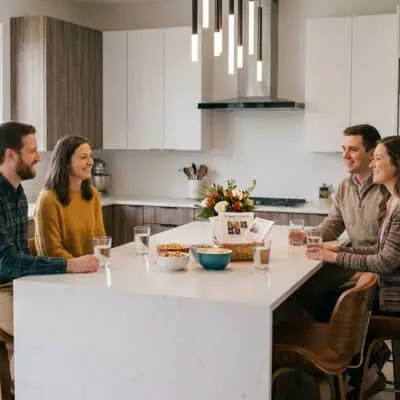
The first half of the visit is about the parish: its ministries, its approach to stewardship of prayer, ministry, and offering, the Parish Handbook, and a basket of small gifts. The second half is about the family. Steve and Barb ask two questions, in this order. First: What are your needs? What should we know about your family as new members of this community? Second: What do you do best? What gifts would you like to share?
Ray, it turns out, likes facilitating meetings and helping people set up household budgets. Michelle has a public relations background, enjoys writing, and likes organizing events. Steve and Barb write it all down, along with email addresses and cell numbers, and schedule a follow-up visit for after the reception.
Notice what didn’t happen. Nobody handed them a sign-up sheet. Nobody mentioned the offertory. The parish asked what the family needed before asking what the family could give, and it asked about gifts before asking about money.
Weeks Five and Six: The Reception and the Second Visit
Three days before the reception, the pastor’s assistant calls to confirm. At the reception, Ray and Michelle meet five other new families. They share their stories, listen to the others, pray evening prayer together, and eat a simple meal. As they leave, the pastor invites them to consider an Affinity Group: eight to ten families, mostly new, who gather four to six times a year for a meal, prayer, and family stories, with the pastor or a parish leader always present.
A couple of weeks later, Steve and Barb return. Now the conversation is specific: which ministries, which retreats, what’s available for the children. They walk through the Total Stewardship Intention Card, which invites gifts of prayer, ministry, and offering, and leave it for the family to fill out over the next week. They explain the offertory envelopes and where the money goes. They confirm the Affinity Group’s first potluck.
Over the next several days, the family talks about it and agrees: they’ve found a home.
Why It Works
Every step in the story has an owner. Greeters, ushers, the music director, the lector, the pastor, the Parish Involvement Director, two hospitality ministers, the pastor’s assistant. No one person carries it, and no step depends on the family taking initiative after the first Connection Card.
Every step also asks before it invites. Needs before gifts, gifts before offering, belonging before stewardship. By the time the Intention Card arrives in week six, Ray and Michelle have been called, visited, fed, and asked what they’re good at. The invitation to give lands as the next step in a relationship, not the reason for the relationship.
This is what ISPD means by “belonging leads to believing.” It’s also why the New Parishioner Welcome process is one of the first things a pastor can introduce when a parish begins Catholic Parish Development. It sets the tone for everything else: this is about engaging people, not raising money.
Where to Start This Fall
Most parishes reading this don’t have all of it. Few have any of it in writing. That’s fine. The homework we give parish leaders after this lesson is simple and serves as a starting point for a staff meeting or a pastoral council agenda this month.
Is your parish warm or cold?
Answer honestly, based on the story. What would Ray and Michelle experience at your 10:30 Mass next Sunday, from the parking lot to the car ride home?
How can a parishioner or visitor tell you what they need?
If the answer is “the bulletin has the office number,” you don’t have a Connection Card. That’s the first thing to build, because it’s what turns a visitor into a name.
How much does your parish value personally getting to know new families?
Not in principle. In practice. Who called the last family that registered? When?
Pick the one step in the story you can realistically own before Advent, name the person who owns it, and start there. The families who registered this summer are still deciding.
Frequently Asked Questions
The Warm Catholic Parish is part of ISPD’s Total Stewardship Program.
For nearly 40 years, ISPD has partnered exclusively with Catholic parishes, schools, and dioceses to build cultures of belonging, stewardship, and engagement through strategic planning, feasibility studies, capital campaigns, and total parish stewardship.
To learn more, contact us.