
The Value of Professional Development in Catholic Education and Parish Life
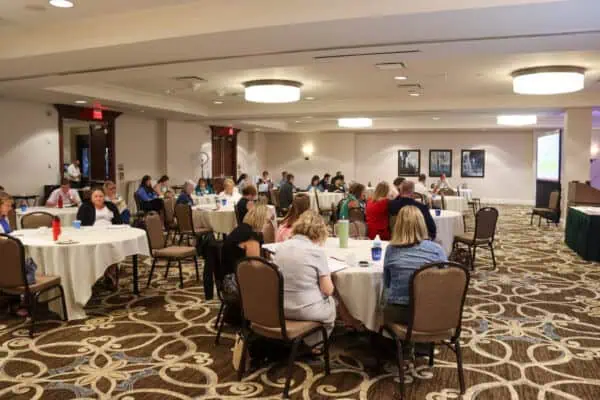
Pastors are asked to be evangelists, sacramental ministers, building managers, and capital campaign leaders. Principals are expected to be instructional leaders, enrollment managers, advancement directors, and communications professionals. Advancement and admissions staff juggle donor relations, data, marketing, and technology—often as a team of one.
The needs have grown. The pace has quickened. The expectations have expanded.
What has not changed is our mission. We still exist to bring people to Christ, to hand on the faith with joy, and to invite students, families, and parishioners into a community where they experience that “belonging leads to believing.” But living this mission well in 2026 requires something more from us: a deep commitment to our own ongoing formation as leaders.
Professional development, in this sense, is not a luxury. It is a form of stewardship—of our vocation, of the people we serve, and of the institutions entrusted to us.
Professional Development as Ministry, Not Just Management
In the world of Catholic education and parish life, it can be tempting to see professional development as something “extra” we will get to when the calendar slows down or the budget loosens up. But when we think about it through the lens of our faith, professional development is part of the ministry itself:
- It honors the dignity of the people we serve by ensuring that their leaders are competent, prepared, and continually learning.
- It helps us lead with confidence instead of with chronic anxiety or constant reaction.
- It allows us to move from a culture of “putting out fires” to a culture of planning, inviting, and engaging.
In development language, we often say: “Development is the meaningful involvement of people in your mission and vision for the future.” That applies just as much to the growth of a school or parish as it does to the growth of a leader. Professional development is one of the key ways we allow the Lord to deepen our own meaningful involvement in the mission we serve.
When leaders are formed and supported, entire communities benefit:
- Boards receive clearer direction and vision.
- Faculty and staff experience more consistent communication and shared purpose.
- Donors and parishioners feel seen, heard, and invited instead of simply “asked.”
- Families experience a school that is both deeply Catholic and well run.
Put simply: investing in professional development is one of the most concrete ways we can strengthen the long-term vitality of our schools and parishes.
Why A Development School Matters Right Now
With that lens in mind, I want to highlight one example of professional development that captures this spirit: the ISPD Summer 2026 Development School in New Orleans, June 22–24. This is not just another conference with a schedule full of disconnected topics. It is built around a very specific conviction: that development, advancement, enrollment, and stewardship are fundamentally about people, not money; about relationships, not transactions.
The theme this year captures both the urgency and the opportunity: “The Art of Advancement in the Age of AI.” Like it or not, the tools around us are changing. Artificial intelligence, data analytics, automation, and social media are no longer “extras” on the margins. They shape how parents first encounter our schools at 2:00 a.m. on their phones, how alumni hear from us, and how donors respond to our appeals. The question is not whether these tools will exist. The question is: will Catholic leaders know how to use them in a way that supports, rather than replaces, the personal, relational work at the heart of our ministry?
What I appreciate about this particular Development School is that it begins with a clear commitment: technology must serve the mission, never the other way around. Session after session returns to the same point:
- Use AI to free up time, so we can invest more of ourselves in face-to-face ministry.
- Use data to understand our communities better, so we can invite and accompany families more personally.
- Use tools to organize and clarify our work, so we can lead with peace instead of burnout.
Whether the topic is donor research, admissions, social media, alumni outreach, or endowment planning, the focus is always the same: how can we better invite, involve, and engage people in the mission of the Church?
Forming the Whole Leader: Multiple Lenses, One Mission

The ISPD Summer Development School also models something essential about professional development: it speaks to the whole ecosystem of Catholic life. Over three days, the sessions are intentionally shaped for:
- Superintendents and diocesan leaders,
- Pastors and parish staff,
- School presidents and principals,
- Advancement, development, and enrollment professionals,
- Board members and key volunteers.
This matters, because sustainable Catholic education and parish life cannot be built from one office alone. Superintendents cannot build vibrant schools without engaged pastors and strong local leadership. Principals cannot stabilize enrollment without support from advancement and marketing. Pastors cannot sustain parish schools without a shared vision, collaborative planning, and a culture of stewardship.
The Development School gathers all of these voices around one set of questions:
- How do we build a culture of belonging, not just a schedule of events?
- How do we form teams—not just job descriptions—to share the work?
- How do we move from short-term fixes to long-range strategic thinking?
- How do we keep Catholic identity at the heart of every plan, every campaign, every communication?
Professional development at its best does exactly this. It helps leaders connect the dots:
- Between mission and money,
- Between vision and daily practice,
- Between technology and human relationships.
From Ideas to Action: What Leaders Take Home
Another sign of good professional development is what people bring back with them. A worthwhile conference does not simply send you home with a tote bag and a stack of slides. It equips you with concrete tools you can begin using on Monday morning.
The ISPD Development School is intentionally built around outcomes like:
- A completed assessment to discern if your school is ready for strategic planning.
- A roadmap for building development capacity across an entire diocese.
- A first-year action plan for new advancement or admissions directors.
- A prioritized admissions automation plan that preserves the human touch.
- A clearer, mission-centered language for development and stewardship conversations.
- A draft set of Top Ten Selling Points and a “WOW” statement for your school.
- An initial plan to find “lost alumni” and begin rebuilding your database.
- A basic framework to begin or strengthen an endowment or planned giving effort.
These are not theoretical exercises. They are real tools that can help leaders return to their schools and parishes with new confidence and clarity. When we invest in this kind of formation, we are not just taking a few days away. We are sowing seeds for years of more effective ministry: better decisions, healthier structures, more engaged people, and a deeper culture of belonging and believing.
A Call to Invest in Your Own Growth
Whether or not you can attend this particular Development School, I want to encourage every leader reading this to make a concrete commitment to your own professional development over the next year. Consider:
- Setting a personal goal: one substantial conference, course, or retreat in 2026–27 that will stretch and support you.
- Identifying one area where you feel least prepared—development, enrollment, strategic planning, communications—and seeking training specifically there.
- Inviting a colleague or board member to attend with you, so you bring back shared learning, not just individual ideas.
- Building professional development funding into your school or parish budget as a non-negotiable investment, not a leftover.
In the Gospels, Jesus consistently withdraws to pray, to reconnect with the Father, and then returns to the work of preaching, healing, and leading the disciples. Our own professional development is, in its own way, a participation in that rhythm: stepping away in order to return more grounded, more equipped, and more ready to serve.
For those who are able, the ISPD Summer 2026 Development School in New Orleans is one powerful opportunity to do just that—to step away for a few days, to learn from experienced Catholic practitioners, to share struggles and successes with peers from around the country, and to return with new tools and new hope. More broadly, it is a reminder of a simple truth: When we invest in the formation of the people who lead our schools and parishes, we are investing directly in the future of Catholic education, parish life, and the young people and families whom God has entrusted to us.
May we never be afraid to keep learning, to keep growing, and to keep seeking the support we need to serve well.