
Workers, Not Master Builders: Catholic Development in the Age of Artificial Intelligence
Dear Friends and Colleagues in Catholic Development,
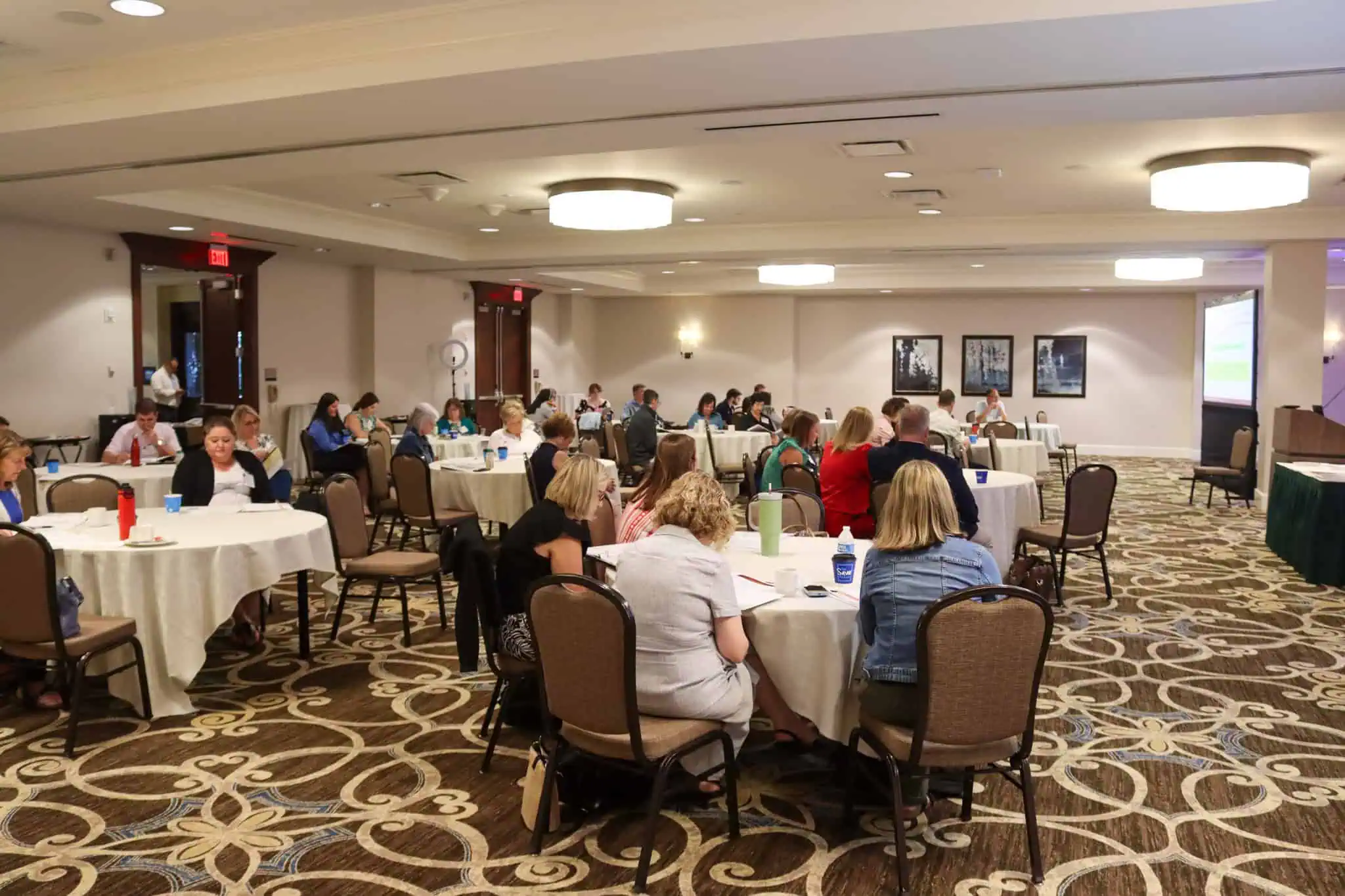
It is a particular grace that I offer to gather with you this June in New Orleans. For three days (June 22 – June 24) at the Hilton Riverside, Catholic (arch)diocesan, parish, and school leaders from across the country will do together what our Holy Father has just asked the whole Church to do in Magnifica Humanitas, his landmark encyclical on artificial intelligence: engage one of the most consequential technologies of our lifetime with wisdom, intentionality, and moral clarity — grounded not in a secular anthropology, but in a Catholic one.
I want to begin by reflecting on the document that makes this year’s gathering so timely, and then to tell you plainly where ISPD stands.
Pope Leo XIV’s Magnifica Humanitas: A Word for Our Moment
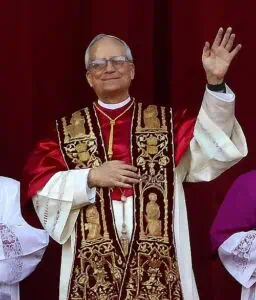
The encyclical is not a theoretical treatise. It is a call. Pope Leo frames our moment as a choice between two biblical images. The first is the Tower of Babel — the grandiose project built out of pride and the illusion of self-sufficiency, which sacrifices human dignity for efficiency and reaches for heaven without God’s blessing, ending in broken communication and division. The second is Nehemiah’s rebuilding of the walls of Jerusalem — a work undertaken in prayer, in which the families were convened, each given a section of the wall, their concerns heard and their efforts coordinated, with God at the center. The Pope is clear about which model we are to follow.
Importantly, Magnifica Humanitas does not treat technology as an enemy. The Holy Father insists that technology is neither inherently evil nor a force hostile to humanity — but neither is it ever truly neutral, because it takes on the character of those who design, fund, regulate, and use it. He acknowledges the familiar concerns — job insecurity, the manipulation of information, threats to privacy and truth, autonomous weapons — but names a deeper danger: that we might begin to see ourselves and one another as mere data points, reducible to what can be measured and optimized. Across its chapters the encyclical safeguards truth as a common good, defends the dignity of work — insisting that AI serve workers rather than the reverse — and speaks tenderly of families and young people as the social conditions for hope.
Where ISPD Stands
Let me be unambiguous about ISPD’s position, because clarity here matters more than anything else I will say.
ISPD sees artificial intelligence as a means — a tool, a way to raise the bar and help us maximize our time. It can take real work off our desks. But it will never, ever replace our mission, and it will never replace the relational heart of everything we do. Magnifica Humanitas confirms what ISPD has always believed: belonging leads to believing.
People come first.
When people come first, the dollars — and the disciples — follow. AI can help us research a donor, draft an appeal, profile a market, or organize an admissions inquiry; it cannot sit across the table and listen to a family’s hopes for their child. It cannot pray with a benefactor. It cannot extend the love of Christ. That is our work, and it remains irreducibly human.
This is precisely the spirit in which our Development School is built. You will see it in nearly every session this year. We will explore how AI can support enrollment, the annual fund, and donor engagement without replacing relationship; what responsible AI use actually looks like inside a Catholic advancement and admissions office; and how to lead our communities through digital transformation without losing what makes Catholic education irreplaceable. From Adam Olenn’s keynote on impact storytelling, to sessions on AI-assisted donor research, mission-centered appeals, planned giving, and automating the admissions journey “without losing the human touch,” the through-line is the same one Pope Leo draws: the tool serves the person, never the other way around.
A Word from These Thirty-Seven Years
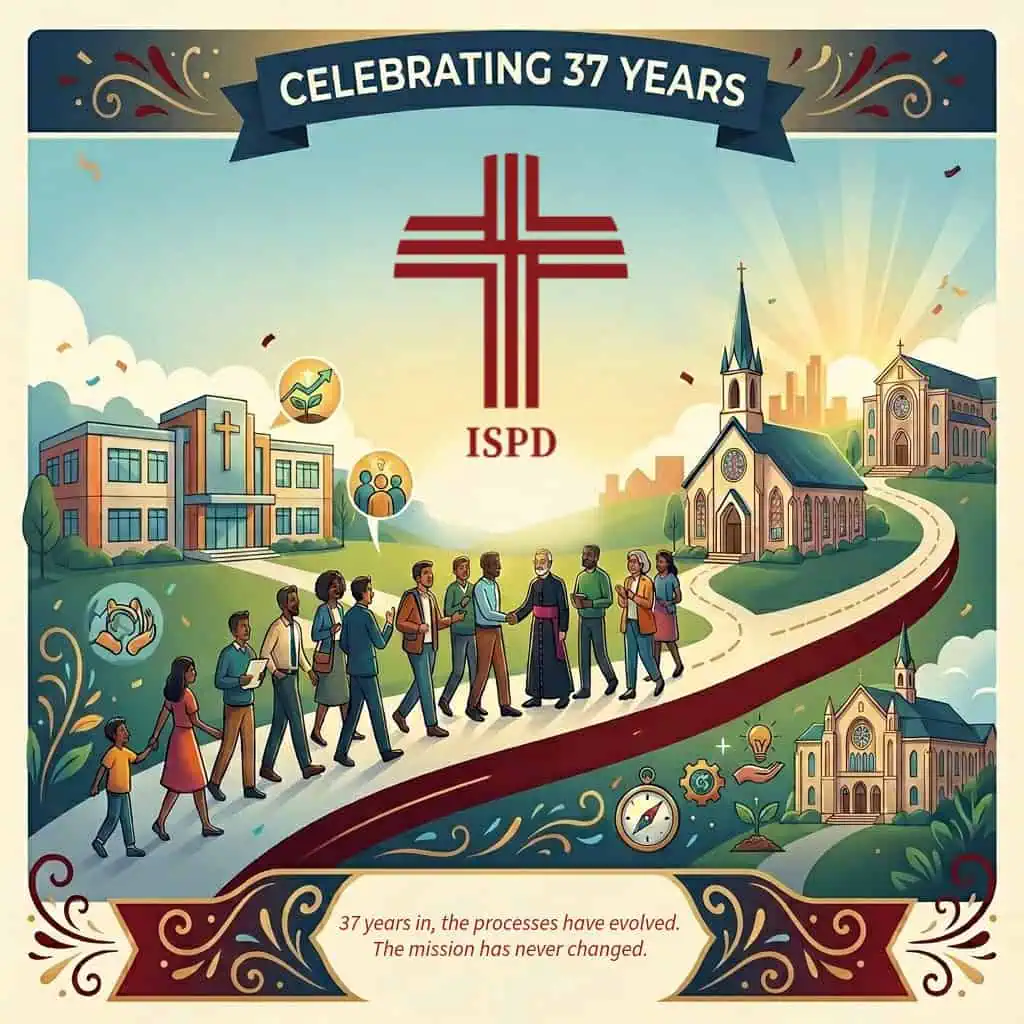
As president of ISPD, I can tell you that in my thirty-seven years, one of the central challenges every Catholic leader faces is simply this: to grow. To keep developing professionally. To not stand still while the world moves. That challenge has never gone away, and it is the reason this Institute (ISPD) exists.
And I will be honest with you — I have been amazed at how much AI can help our Catholic schools and parishes streamline processes, analyze data, and create documents, all without ever losing the human touch. I did not expect to say that. But I have watched it happen, in real offices, with real teams who suddenly have hours back for the relationships that matter.
So let me put it as plainly as I know how:
“If, after being in the consulting business for almost 37 years, I can say anything with conviction, it is this: this will be one of the most singular strategic moments in Catholic School and Parish Development and Advancement — if used correctly, like Pope Leo shares.”
That conditional — if used correctly — is the whole ballgame. Used as a master, AI becomes Babel. Used as a tool in service of people and mission, it helps us rebuild Jerusalem.
The Long View
I want to close where I always return when the work feels larger than we are. Among the wisest words ever written about ministry is the prayer composed in memory of Archbishop Oscar Romero, sometimes called “The Long View.” It reminds us that the Kingdom is not only beyond our efforts but beyond our vision — that we plant seeds that one day will grow, and water seeds already planted. And it offers this:
“We are workers, not master builders; ministers, not messiahs. We are prophets of a future that is not our own.”
There is great liberation in that. We cannot do everything — and no program, no platform, no artificial intelligence ever will. But that frees us to do something, and to do it very well: to lay foundations, to provide yeast, to open a door for the Lord’s grace to enter and do the rest. AI may help us build the walls faster. It will never tell us why we build, or for whom. That belongs to us, and to God.
I look forward to walking these three days with you in New Orleans — to learning together, growing together, and keeping, always, the human person at the center.
In Christ and in this shared ministry,
Frank Donaldson
President, Institute for School & Parish Development
ISPD Summer Development School — June 22–24, 2026 — Hilton New Orleans Riverside