A capital campaign in a Catholic school or parish is a major undertaking — months of planning and sometimes years of preparation before a community is ready to launch one that will succeed. The level of your culture of giving matters as much as the size of your project list.
Since 1989, the Institute for School & Parish Development has guided hundreds of Catholic schools and parishes through financial feasibility studies and capital campaigns — helping raise close to $1 billion to build new facilities, renovate existing ones, establish endowments, and set a vision for the next five to ten years.
We work exclusively with Catholic institutions. Every study and every campaign is built around your community and your mission, not a secular fundraising template.
raised for Catholic institutions
years of Catholic development, since 1989
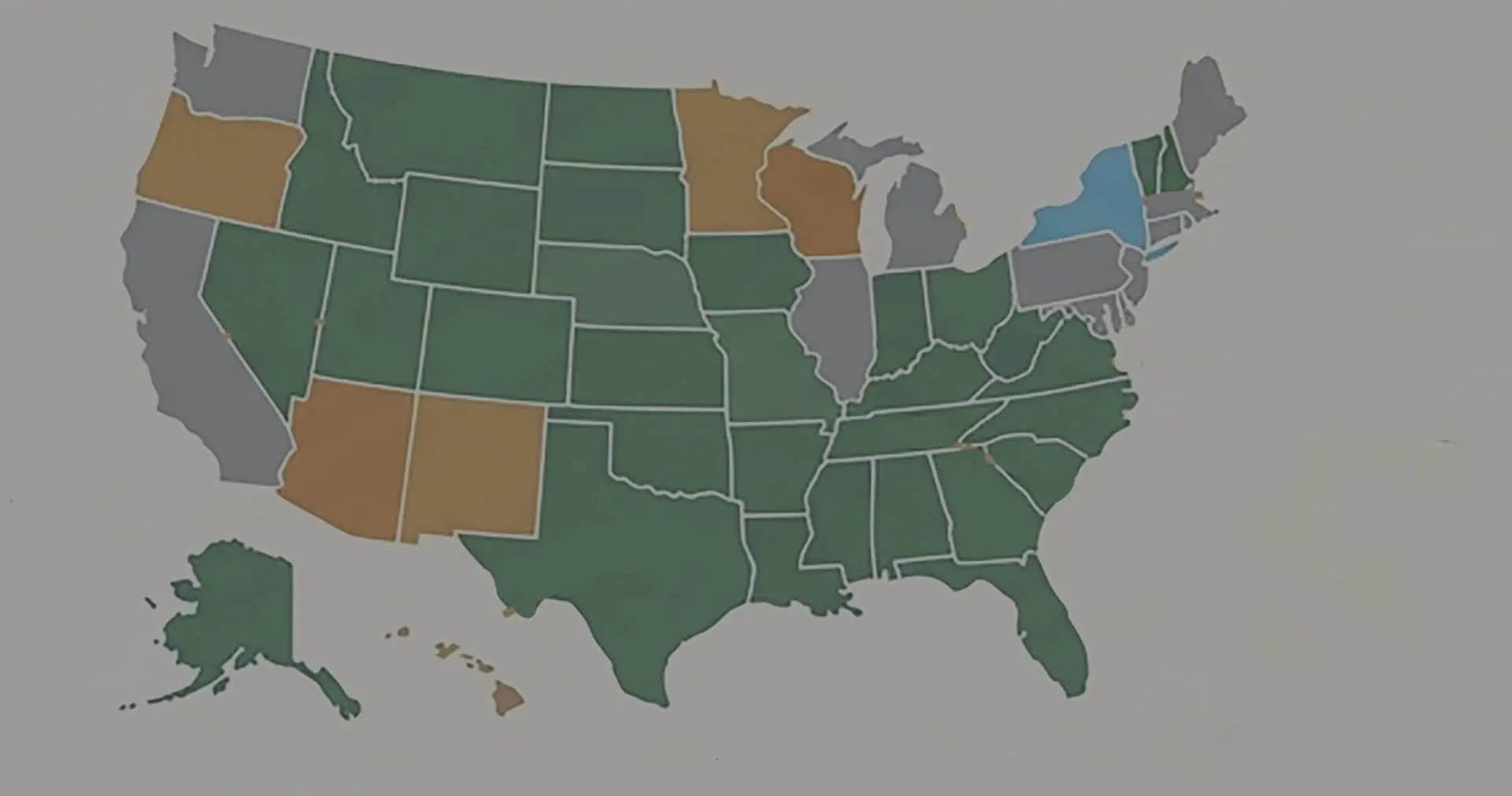
of schools, parishes, archdioceses, and dioceses nationwide
Catholic — the only communities we serve
Catholic Capital Campaigns We’ve Guided

Feasibility Study Process
The study is not a formality. It shapes the campaign.
Most firms treat the feasibility study as a gate you pass on the way to the real work. We don’t, because in our experience, the study is what determines what the campaign becomes.
At La Salle High School in Cincinnati, a master facilities vision totaling $65.4 million across 11 projects was included in the study. What came out was a four-tier prioritization, a recommended order of investment, and a right-sized first phase of $15–16 million. The study didn’t approve that campaign. It rewrote it.
At St. Matthew the Apostle in River Ridge, Louisiana, the sequence ran in order — Assessment, Strategic Plan, Financial Feasibility Study, Capital Campaign — across four years. The campaign exceeded its goal, with 42% of registered parishioners participating.
At St. Luke the Evangelist in Slidell, Louisiana, the study projected $5.8–6.2 million, compared with the $6.7 million the parish needed. They moved forward with clear priorities and a disciplined process, raising nearly $7.0 million in eighteen months. The number in a study is a floor built on evidence — not a ceiling or a sales figure.
They’re two separate engagements, and in most dioceses, the study is required before a campaign can move forward. A campaign built on a study is a different campaign.
What a feasibility study actually involves
Every firm says it conducts feasibility studies. Very few will tell you what one contains. An ISPD Financial Feasibility Study is a community-wide listening process, not a round of phone calls to major donors.
Here is the scale of a single study — La Salle High School, December 2025 through March 2026.
Input and Listening Sessions
individual input sheets returned
responses to the community-wide survey
confidential personal interviews
personalized online questionnaires
member Steering Committee, plus an Executive Committee
The findings were unambiguous. Ninety-eight percent of those interviewed rated La Salle an Outstanding or Above Average Catholic school. Ninety-five percent were Favorable or Very Favorable toward launching a campaign. And those same participants indicated $8,183,500 in giving potential before a single invitation had been extended.
In most ISPD campaigns, a significant share of Silent Phase gifts — and a large share of campaign leaders — come directly from the people interviewed during the study.
The Five Phases of an ISPD Catholic Capital Campaign


Success Story — River Ridge, Louisiana
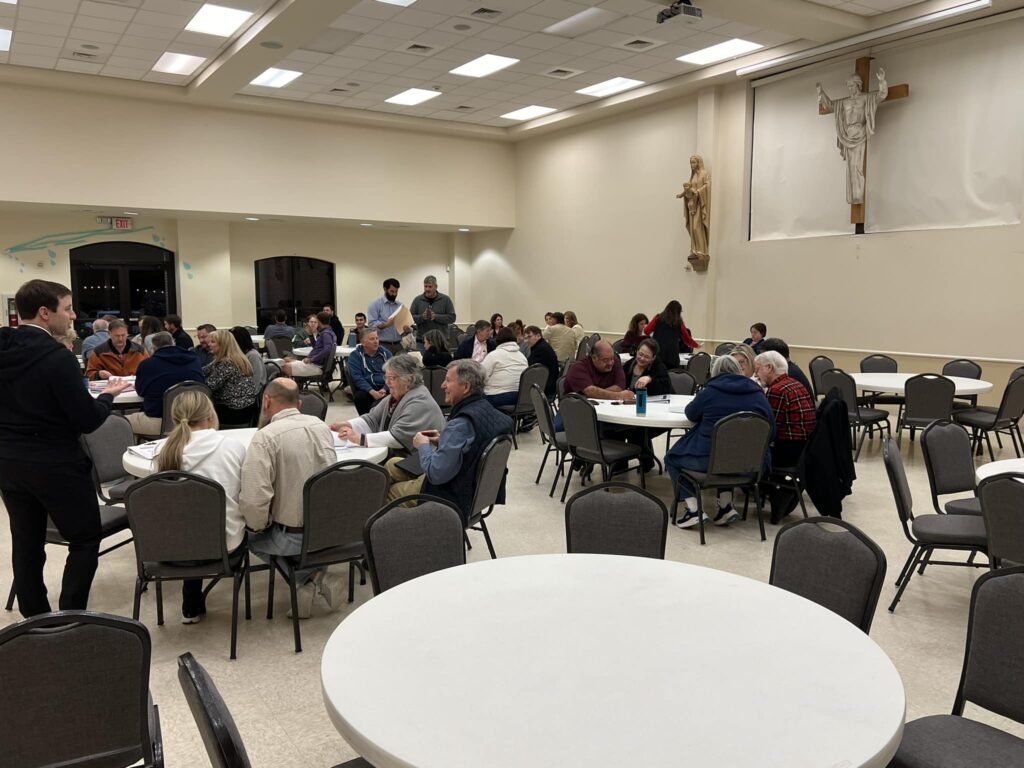
St. Matthew came to ISPD in the fall of 2021 with no campaign in view. What it wanted was a plan.
We conducted an Assessment, seated an Executive Committee and Core Team, surveyed parish and school families, ran two Strategic Planning Workshops, and convened a parish- and school-wide Convocation. Hundreds took part. Nine Challenges emerged and were ranked against five separate barometers, and the Collaborative Plan of Action was delivered in March 2023.
The second-ranked Challenge set out the sequence — a site master plan, listening sessions, surveys, a demographic study, and then a Financial Feasibility Study. St. Matthew followed it in order, and the Study produced SMA for Generations.
The campaign closed above goal: $3,428,000 in pledges from 491 donors against a $3.2 million target — with 42% of registered parishioners participating, a level of household participation few parish campaigns reach. From the outset the campaign said it was not relying on a handful of high-capacity donors, but inviting every family to consider a gift of prayer, a gift of service, and a gift of financial support.
Four years from the first Assessment to a campaign closed above its goal.
What you receive
From the feasibility study
From the campaign
Questions Catholic leaders ask us
Yes — and for Catholic parishes and schools, it is a first step, not a luxury.
A Financial Feasibility Study tells you four things you cannot know any other way:
- Whether there is real support for your proposed projects, and in what priority order
- What you can realistically raise, based on data rather than hope
- Who your campaign leaders and leadership donors will be, before anyone is asked for a gift
- What do your own people honestly think about your mission, vision, leadership, and case for support
ISPD’s recommendation is unambiguous: do not launch a capital campaign without an objective feasibility study conducted by experienced outside Catholic counsel.
A feasibility study is a structured, pastoral listening process led by outside counsel — not a survey.
A full ISPD study includes:
- A preliminary case statement, marked DRAFT — why the projects are needed, how they advance your mission and vision, and a tentative goal
- Careful screening of interview candidates — top annual givers over five years, past campaign donors and volunteers, known financial leaders, and other engaged stakeholders
- Personal invitations from the pastor, principal, president, or board chair, with the case statement and a plain-language Q&A
- One-on-one confidential interviews, 30–45 minutes, usually on site — covering how they feel about the parish or school, their read on leadership and vision, their reaction to the projects and goal, their own giving capacity and willingness, and whether they would lead
- Phone and online questionnaires for those who cannot meet in person
- A written final report summarizing findings, assessing the climate for a campaign, recommending an achievable goal or goal range, and setting out next steps
In most ISPD campaigns, a significant share of Silent Phase gifts and a large share of campaign leaders come directly from the people interviewed in the study.
Plan on 12–18 months from the start of the feasibility study through the end of active solicitations, with pledge redemption continuing for three to five years after that.
| Stage | Typical duration |
|---|---|
| Strategic planning and project definition | 6–12 months before any campaign activity |
| Phase I — Exploration, Discovery, Feasibility | 4–6 months |
| Phase II — Campaign Organization | 2–3 months |
| Phase III — Silent / Pacesetter Phase | 4–6 months |
| Phase IV — Public Phase | 2–3 months |
| Phase V — Operation Homestretch | 3–4 months |
That is the question the feasibility study exists to answer.
Through confidential interviews and data analysis, outside counsel tests the strength and clarity of your case, assesses your culture of giving and the trust your community has in its leadership, and identifies leadership-level donors and the gift ranges they are likely to consider.
The final report then recommends:
- An achievable goal, or a goal range
- A preliminary gift-range structure — how many gifts at each level the goal actually requires
- Whether conditions are right to proceed now, adjust the scope, or wait
Rather than guessing, you get a realistic picture of your indicated giving potential and the size and shape of the donor base needed to reach it.
A feasibility study is not pass/fail. It is planning information.
If the study finds your goal is too high or the timing is wrong, the recommendations usually include:
- Adjusting the scope or phasing your projects — renovations now, new construction later
- Setting a realistic goal with a challenge goal above it if momentum builds
- Strengthening mission clarity, the annual fund, or leadership visibility first
- Doing more relationship-building before launching
A “not yet” finding is what saves you from a public shortfall, and it comes with a roadmap for becoming ready.
It also works in the other direction. At St. Luke the Evangelist in Slidell, Louisiana, the study projected $5.8–6.2 million, short of the $6.7 million needed. The parish moved forward with clear priorities and a disciplined process and raised nearly $7.0 million in eighteen months. The number in the report is a floor built on evidence, not a ceiling.
The Silent Phase secures roughly 70–75% of the goal from a small number of leadership donors before anything is announced publicly. The Public Phase invites everyone else.
Silent / Pacesetter Phase — leadership and major gifts. Those with the greatest capacity and deepest connection, many of them people interviewed during the feasibility study, plus honorary chairs, operational chairs, and division chairs. Asked one-on-one, in person, in homes and small receptions.
Public Phase — broad participation. Every parishioner, school family, alumnus, and friend is invited, through in-pew and in-person appeals, group receptions, mailings, digital outreach, testimonies, and school presentations, to secure the remaining 25–30%.
The strength of the Silent Phase largely determines the confidence and energy of the Public Phase.
Fewer at the top than most people expect, and more at the base than most campaigns plan for.
- A small group of leadership gifts — often 10–20 households — typically provides 50–60% of total dollars
- A middle tier of perhaps 40–80 households provides another significant share
- The remainder comes from a broad base of families, alumni, and friends giving at every level
The feasibility study and campaign plan build you a gift-range chart — one gift at this level, two at that, four at the next — so you know whether you have enough donors at each tier to reach the goal.
The question is never only how many donors. It is whether you have enough at each level of the pyramid and whether everyone has been genuinely invited. At St. Matthew the Apostle in River Ridge, Louisiana, 42% of registered parishioners participated, and the campaign closed at $3,428,000, exceeding the $3.2 million goal.
A capital campaign consultant brings process, objectivity, and a proven method, so your leadership can stay focused on ministry and relationships.
Before the campaign — assess readiness across mission clarity, leadership, annual fund, database health, and culture of giving; help shape the project list and the case for support.
During the feasibility study — design and conduct the study, screen and interview candidates alongside your leadership, run the confidential interviews, analyze the findings, and deliver a written report with a recommended goal, timing, and next steps.
Campaign organization — form the Executive Committee, recruit and train honorary chairs, operational chairs, and division teams, finalize the case statement and campaign materials, and build the plan and calendar.
Silent Phase — coach leaders through personal visits and leadership asks, structure receptions, and monitor progress toward the 70–75% benchmark, adjusting as needed.
Public Phase and the final 100 days — plan parish- and school-wide invitations, design the Operation Homestretch push (often with a matching or challenge gift), and guide follow-up, reporting, and celebration.
Beyond dollars, a good consultant helps you engage more people meaningfully in your parish’s or school’s mission. That is development as ministry, not fundraising.
Let’s Make Things Happen!
ISPD has more than 37 years of experience in Catholic capital campaign management. We are ready to help you achieve your institution’s goals.
Contact us today to learn more.