A parish and a school that share a campus, a pastor, and a mission very often do not share a plan. Each has its own council, its own priorities, its own budget conversation — and the two sets of decisions quietly work against each other.
The Collaborative Strategic Plan produces one plan instead of two. It aligns the goals, resources, and calendar of a parish and its school around a single vision that honors both identities rather than subordinating one to the other.
The same process works wherever more than one Catholic community must plan as one body — several parishes choosing to collaborate, a group of schools sharing services, or parishes a diocese has formally grouped together.
Whatever the configuration, we engage parishioners, parents, faculty, and council members from every community involved in building it. A plan that arrives from above is a plan that gets survived. A plan people helped write is a plan they carry.
We do not begin at the beginning
By the time a parish and school call us together, their people have usually been through a great deal already. A diocesan planning initiative. A vision and values process. An accreditation cycle. A discernment about buildings, finances, or staffing. Surveys they have answered more than once.
The last thing that community needs is a consultant who starts over.
ISPD does not duplicate work that has been done. Before we gather anything new, we read what already exists — your diocesan planning framework, your pastoral priority plan, your discernment findings, your Disciple Maker Index results, your demographic data, your deferred maintenance schedule, your Mass counts and giving trends.
Your existing vision, mission, and values are carried forward, not replaced. Priorities your people have already named are honored and folded in. Then we build the thing that is genuinely missing — the plan of action that makes all of it operational.
We are not a replacement for the work your diocese or your accrediting body has asked of you. We are the process that gathers it into one written, measurable plan that a parish and a school can both stand behind.
Who this process is for
If it’s one institution
A single school planning alone is a Strategic Growth Plan.
A single parish looking five to ten years out is a Long-Range Pastoral Plan.
An entire diocese planning across all of its schools is (Arch)Diocesan Strategic Growth Planning.
The Collaborative Strategic Plan is specifically for the middle ground — more than one institution, less than a whole diocese, and everyone in the room has a legitimate claim on the outcome.
Eight Focus Areas
Six, eight, or ten months
The same process runs on three timelines. Where a deadline is driving you — an accreditation visit, a school year turning, a diocesan submission, a leadership transition — that date should decide which one you choose.
Ten months. All eight Focus Areas, one workshop per month. The widest runway for consensus, the deepest engagement, and the most room between sessions for reflection. This is the pace we recommend when a community wants the greatest number of people meaningfully involved.
Eight months. All eight Focus Areas again — including the Ultimate Question Survey and the Convocation — with a tightened front end and workshops paired two to a month. A strong balance of engagement and momentum.
Six months. The written plan on an accelerated schedule, with two adjustments. The Ultimate Question Survey is set aside, and the Assessment leans instead on your existing survey data and discernment listening. The Convocation is replaced by a half-day Planning Area Summit for the Steering Committee and Planning Team co-chairs. Either element can be restored by extending the engagement a single month. This option asks more availability of your Executive Team and Steering Committee.
Monthly investment rises as the timeline shortens — the work concentrates rather than reduces — while the total professional fee falls. We will walk through all three with you.
Success Story — Chicago, Illinois
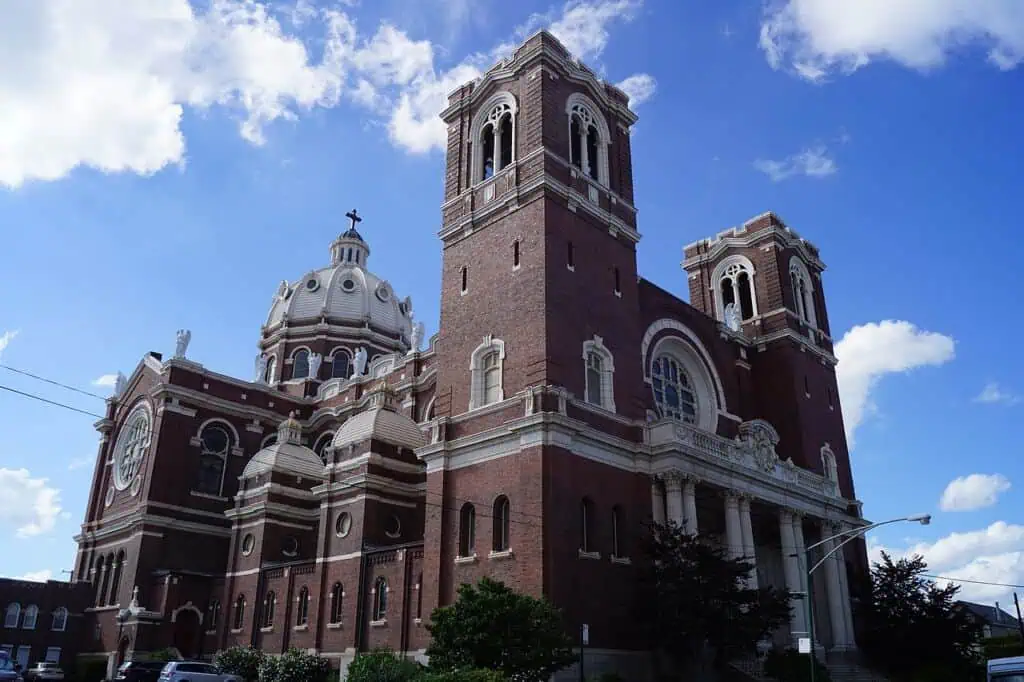
St. Mary of the Angels
St. Mary of the Angels is a parish in Chicago’s Bucktown neighborhood with a preschool–through–eighth-grade school of roughly 320 students on the same campus. The school had been slated to close in 2009 and had come back. By 2022 the question was no longer survival — it was whether a parish and a school that shared a campus also shared a future.
They did not, quite. Some parishioners drove in from as far as Libertyville and Indiana. Some school parents had never been inside the church except for the school Mass. Each side had its own leaders, its own calendar, and its own idea of what came next.
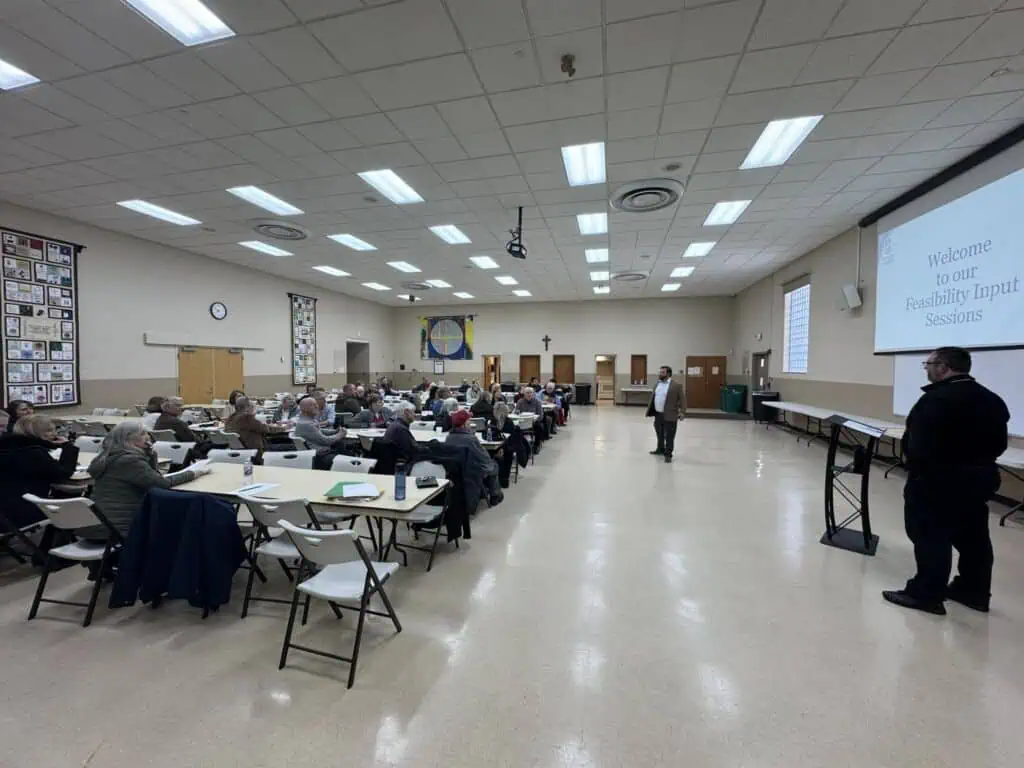
In January 2022 the parish and school engaged ISPD together. Over the next nine months we conducted an initial assessment, surveyed parish and school families, seated an Executive Committee and a Core Team drawn from both, ran two strategic planning workshops, and brought the whole community together for a planning convocation. Input came from hundreds of parish and school families.
Ten challenges came out of that work. Each was ranked five separate times — by the planning teams, by two different votes at the convocation, by the Executive Committee, and by ISPD — so the priority order was the community’s, not a committee’s. The challenge that finished first says everything about why this process exists:
“How can we meaningfully engage more school families in the life and mission of the parish, and more parish families in the life and mission of the school?”
The plan that followed treats the parish and the school as one operation. A single church-and-school organizational chart. A Director of Operations responsible for people, money, and buildings across both. A site master plan covering the entire campus rather than the school’s half of it. A joint annual fund. Volunteer recognition written to run in both directions — school families serving the parish, parish families serving the school. Five implementation teams, each carrying two of the ten challenges, chaired by people who had been in the room from the start.
ISPD associate Tim Clifford and ISPD president Frank Donaldson led the engagement, working with Father John Waiss, pastor, and Beth Dolack, principal.
Three years on, the work is visible. The parish’s Family Hub — a remodeled gathering space with a coffee area and improved access into the church, hosting couples’ nights with childcare provided — answers the hospitality challenge the community ranked second. The Family of Faith ministry brings families together twice a month, which is the first priority in practice rather than on paper. New steps and a restored colonnade are the site master plan moving. ISPD didn’t run any of it. The parish and school did all of it, based on what they decided together to do.

Success Story — Madeira, Ohio
St. Gertrude Church and School
St. Gertrude in Madeira, Ohio is a Dominican parish with a K–8 school in the same building — parish offices and school offices sharing one lobby. Space was the visible problem. Underneath it was a harder one: two operations, one campus, and no single plan for either.
ISPD began working with St. Gertrude in the fall of 2022. Following an initial assessment, a survey of parish and school families, an Executive Committee, a Core Team of parish and school leaders, two strategic planning workshops, and a community-wide convocation, the final Collaborative Plan of Action was delivered in June 2023.
Seven challenges emerged and were ranked five times over. Facilities finished first — a new gym attached to the school, the old parish center repurposed for parish staff, and the school building returned to the school, which resolves the security question as a byproduct rather than as a separate project.
Second place is the one worth studying. St. Gertrude committed to hiring a single development director for the parish and the school, working from one database that holds parishioners, school parents, alumni, grandparents, past parents, and business supporters together. Enrollment management sits in the same job description as annual fund, endowment, and planned giving — because at a parish school they are the same relationships.
The plan also put the Pastoral Council and the School Board in a room together to work the implementation, aligned the parish faith formation program with the school religion curriculum, and asked the pastor to speak about the school from the pulpit as a ministry of the parish rather than a tenant in its building.
ISPD associate Tim Clifford and ISPD president Frank Donaldson led the engagement, working with Father John Paul Walker, O.P., pastor, and Sister Mary Agnes Greiffendorf, O.P., principal.
Questions Family and parish leaders ask us
No — and we will not repeat it. Diocesan pastoral planning initiatives form the Family and set the principles. Vision and priority processes give you a vision, mission, values, and pastoral priorities. Discernment processes weigh buildings, finances, and personnel and make recommendations to your bishop.
None of those produces a written plan of action with named owners, timelines, and measurable objectives. That is the gap this process fills. We read everything already completed, carry your vision and priorities forward intact, and build the operational plan on top of it.
Structurally. Every Planning Area Team is drawn from all the parishes and all the schools. Steering Committee membership spans every community. We interview each member of the leadership team individually and confidentially at the outset, so concerns surface early and privately rather than late and publicly.
And the Assessment looks explicitly at the relationships between the parishes and between the schools — that is one of the areas we evaluate, not an afterthought.
75 to 100 people serve on the Collaborative Planning Area Teams, 8 to 10 per Area, drawn from every parish and school. The Convocation brings in the wider community beyond that, along with invited delegates who bring outside expertise.
Yes, and it usually must. Deferred maintenance across multiple campuses, thin operating reserves, offertory that has not kept pace with inflation, and a donor base concentrated in older parishioners are the pressures that make Families of Parishes necessary in the first place.
Operational Vitality and Total Stewardship is normally its own Planning Area — including the question of whether and when a capital campaign should be undertaken, and by whom.
A written Plan of Action containing your vision, mission, and values; the process and the people who shaped it; the Assessment summary; each Planning Area with its purpose statement, goals, and SMART solutions; and implementation recommendations with named owners and timelines.
Then a published version of the Plan for your community, a communication strategy, and the structure to carry it into implementation.
Let’s Make Things Happen!
Tell us what your parish and school have already been through, and we will show you what comes next.
Contact us today to learn more.